The Brands That Feel Alive Will Win
Brand Side of the Table
Brand Side of the Table
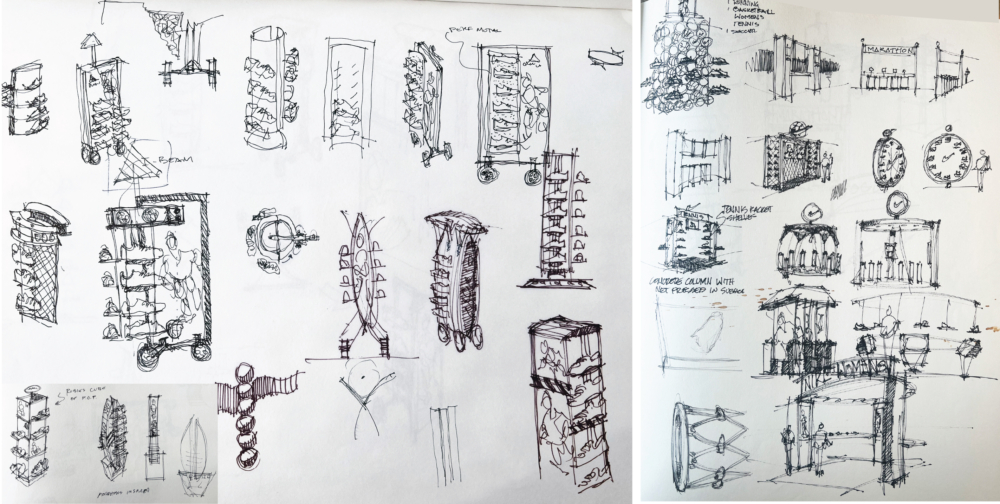
These are sketches from my Nike days. Rough. Imperfect. Fast.
But they show something I still believe is essential to design: exploration. Exploring for the idea. Exploring for the form. Exploring for the thing that makes something feel different.
I was doing these at a time when we were first being introduced to Adobe Illustrator. That was another revolutionary tool. It made design faster, cleaner, more efficient, and more scalable. But it did not replace the idea. It changed how the idea got made.
We are in another one of those moments. AI is an incredibly powerful tool that can accelerate the process, open up possibilities, and generate options in seconds. I use it. I value it. I think it belongs in the process.
But here is the tension. AI is trained on what already exists. So when we ask it to create a logo, a brand, or a visual system, we are often asking the internet’s average to give us an answer.
And average is not differentiation.
That matters because brands are not built by looking generally good. They are built by becoming specific. Memorable. Ownable. And most importantly, felt.
The real value of design is not just the final artifact. It is the thinking behind it. The wrong turns. The half-formed ideas. The odd little marks. The hand trying to catch up with the mind.
I’ve always been moved by one interpretation of the Navajo Indian’s weaving tradition of the “spirit line,” the idea that an intentional imperfection or pathway in the work can reflect humility, a reminder that none of us are perfect.
I think about that when I look back at old sketchbooks. The roughness is not a flaw. It is the life in the work. It shows the human being inside the process.
AI can produce. Designers have to decide. AI will absolutely change design. It already has.
But the best brands of the next era will not be the ones that look the most generated. They will be the ones that feel the most alive.
So use the tool.
But don’t skip the thinking. Don’t skip the hand. Don’t skip the spark.